
When should you change the radio station?
Par Christophe · 20 July 2026
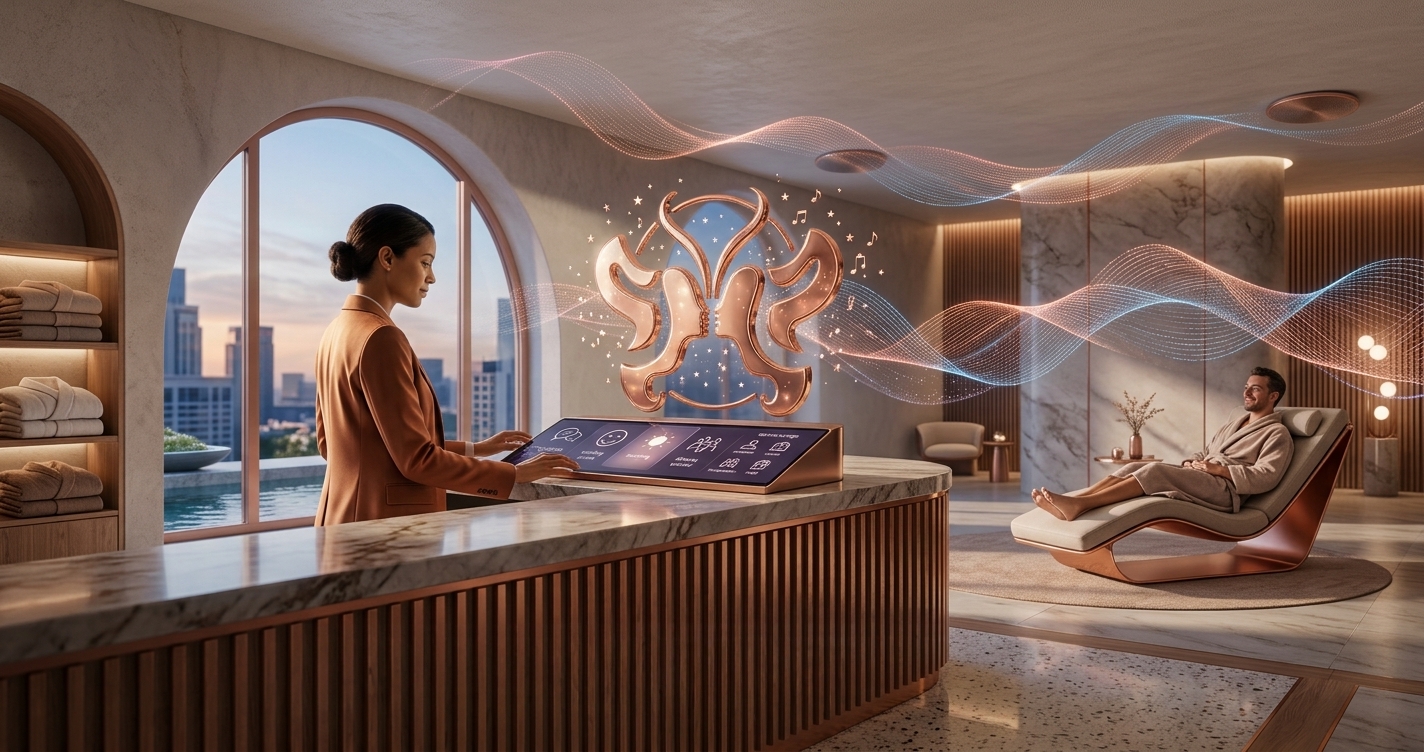
The right signals to look out for in a spa or hotel
Changing the music can improve an atmosphere.
But changing it too often can also ruin it.
In a spa, a hotel, or a wellness space, the goal is not to refresh the atmosphere at every moment. The goal is to maintain sound consistency while avoiding fatigue.
So the real question is not: “What do we play now?”
The right question is: “Do we have a good reason to change?”
Signal 1: staff fatigue
The staff is often the first to feel the repetition.
If several people point out that the atmosphere is becoming tiring, too intrusive, or too repetitive, it is a useful indicator.
But beware: you shouldn’t react to every single impression. It is better to observe a trend over several days.
Signal 2: guest feedback
A guest who spontaneously mentions a pleasant atmosphere provides a positive signal.
Conversely, if some guests find the space too loud, too quiet, or less soothing, it warrants an adjustment.
Guest feedback should guide the decision, especially when it concerns the overall feel of the place.
Signal 3: the time of day
The morning atmosphere does not always need to be the same as the end-of-day atmosphere.
In the morning, you might look for a sense of openness, clarity, and active calm.
In the evening, a slower and more enveloping atmosphere can better accompany fatigue.
Changing the radio station can therefore make sense if the change follows a stable logic.
Signal 4: foot traffic
On busy days, the space naturally becomes noisier.
It may be necessary to choose a more structuring atmosphere, capable of stabilizing the energy without increasing stress.
Conversely, during quiet periods, a softer radio station can better fill the space without weighing it down.
Signal 5: the type of treatment or space
A deep tissue massage room, a reception desk, a recovery zone, or a retail space do not have the same function.
Changing the radio station is relevant when you change your intention: reassuring, enveloping, slightly energizing, supporting recovery, or creating a welcoming signature.
The simple rule
To avoid improvisation, one rule works well:
- One main radio station per zone
- An alternative radio station defined in advance
- A maximum of one change per day
- Observing feedback over several days
- An adjustment based on usage, not mood
Conclusion
You shouldn’t change the radio station just because you are bored.
You should change the radio station when a real signal shows that the atmosphere needs to evolve.
With a few simple guidelines, the music remains consistent, the staff makes fewer decisions, and the guest enjoys a more stable and professional experience.