
Sound ambiance as a team tool: fewer decisions, more consistency
Par Christophe · 24 August 2026
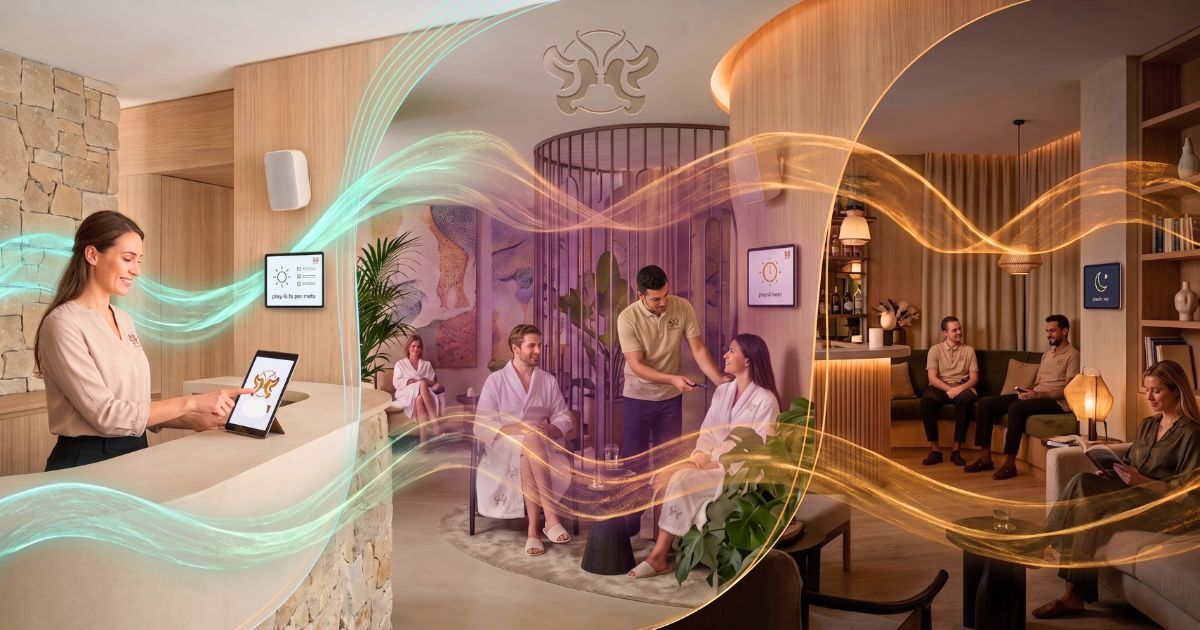
In many establishments, the sound ambiance relies on daily micro-decisions.
Who starts the music?
Which playlist to choose?
Should the volume be turned down?
Is this ambiance suitable for the afternoon?
Why did the music stop?
Are we keeping this selection for tomorrow?
These questions seem small. But when accumulated, they create instability.
For the team, it’s an extra burden. For the customer, it’s a less consistent experience.
Sound ambiance is also an organizational matter
We often talk about music as an aesthetic topic.
But in a professional setting, it is also an operational matter.
A well-thought-out sound ambiance must be easy for the team to use. It should not depend on a specific person, a daily mood, or an improvised search on a music platform.
When the system is clear, the team saves time.
They don’t need to make constant decisions. They can focus on the welcome, care, service, and attention given to the customer.
Fewer decisions, more consistency
The quality of a venue does not only rely on grand moments. It also relies on consistency.
A returning customer needs to find consistency.
A new team member should be able to respect the ambiance without reinventing everything.
A manager needs to know that the experience remains stable, even when they aren’t there.
This is where sound programming becomes useful.
It transforms a series of informal decisions into a simple framework.
What ambiance in the morning?
What intensity in the afternoon?
What atmosphere in the waiting areas?
What continuity between reception and treatment areas?
Once these choices are structured, the team no longer needs to remake them every day.
Sound also influences the team
We often think of the customer, less of the team.
Yet, the people working in the venue hear the music for hours. An ambiance that is too repetitive, too loud, or too variable can become tiring.
Conversely, a stable and well-adjusted ambiance can make the work environment more comfortable.
This is important because a team less exposed to a poorly managed sound ambiance will be more available for the customer.
The sound ambiance shouldn’t just be appealing. It needs to last over time.
A framework does not prevent personality
Structuring the sound ambiance does not mean making the venue impersonal.
On the contrary.
A clear framework allows the venue’s identity to be expressed better. It avoids contradictory choices and breaks in ambiance. It makes the sonic personality more distinct.
The venue no longer depends on a randomly found playlist. It has a direction.
This direction can remain flexible, but it gives a common foundation to the whole team.
Conclusion
Sound ambiance is not just about music.
It is a team tool.
Well-thought-out, it reduces unnecessary decisions, stabilizes the customer experience, and makes daily life simpler. It allows the venue to remain consistent even when staff changes, when activity levels vary, or when the day gets busier.
Good sound programming does not replace human attention.
It leaves more room for it.