Sound Therapy: What Science (Really) Says
Par Christophe · 17 April 2026
Sound therapy encompasses very different practices (guided meditation, sound baths, bowls, gongs, binaural beats, therapeutic music).
The best-documented effects mainly concern relaxation, stress management, mood, and pain perception, through known neurophysiological mechanisms (attention, breathing, rhythm, stress response).
The “miraculous” promises (curing a specific disease with a frequency) are not established. However, these practices can be an excellent complement if they are well-structured.
1) Sound therapy: what exactly are we talking about?
The word sound therapy is an umbrella term. It can refer to:
– structured music listening (therapeutic playlists, soundscapes)
– guided sessions (breathing + voice + ambiance)
– acoustic instruments (Tibetan/crystal bowls, gongs, tuning forks)
– auditory stimulation (binaural beats, isochronic tones)
– related clinical approaches, such as certain forms of music therapy (a practice supervised by trained professionals)
In a serious article, the first step is therefore to name the practice and avoid mixing everything up.
2) Plausible (and well-known) mechanisms
Without needing “magic”, sound can act through several pathways:
1. The autonomic nervous system: slow rhythms, a stable atmosphere, and a reassuring voice promote a reduction in activation (less tension, deeper breathing).
2. Attention: focusing on a timbre (bowl, gong) can reduce rumination. This is similar to a meditation technique (attentional anchor).
3. Entrainment (entrainment): the body likes to align itself with a tempo (breathing, micro-movements). A regular rhythm can support a return to calm.
4. Emotion and memory: music is a powerful emotional trigger. It can activate memories and modulate mood.
5. Pain perception: distraction, relaxation, sense of control, and sometimes reduced associated anxiety.
These mechanisms do not “prove” all promises, but they make certain reported benefits understandable.
3) What does the research say?
The realistic consensus (as can be read in many reviews):
– Effects are often modest to significant on perceived stress, anxiety, mood, and sleep quality (depending on context and populations).
– Heterogeneous studies: different protocols, sometimes small samples, difficult to compare.
– It is more sound to speak of support for regulation (stress/attention/emotion) than of “treatment” for a specific pathology through a frequency.
4) Common myths (and how to reframe them)
– “This frequency cures X” → rephrase as: “this session can promote relaxation and comfort”.
– “A sound works the same for everyone” → no: auditory sensitivity, personal history, fatigue, context.
– “The louder, the better” → false: excessive volume is counterproductive and can be dangerous.
5) How to try it the right way
1. Define the goal: relaxation, falling asleep, concentration, recovery.
2. Choose a format: 10–20 minutes, at a comfortable volume.
3. Simple measurement: stress rating before/after (0–10), sleep quality, body tension.
4. Adjust: duration, time, type of sound (instrument, voice, pink noise, soundscape).
6) A proposed StarkStream ritual (20 minutes)
– 2 min: set intention + comfortable position
– 6 min: guided slow breathing
– 10 min: soundscape or sound bath (long timbres)
– 2 min: silence + body scan
StarkStream: available sound therapies (radio stations)
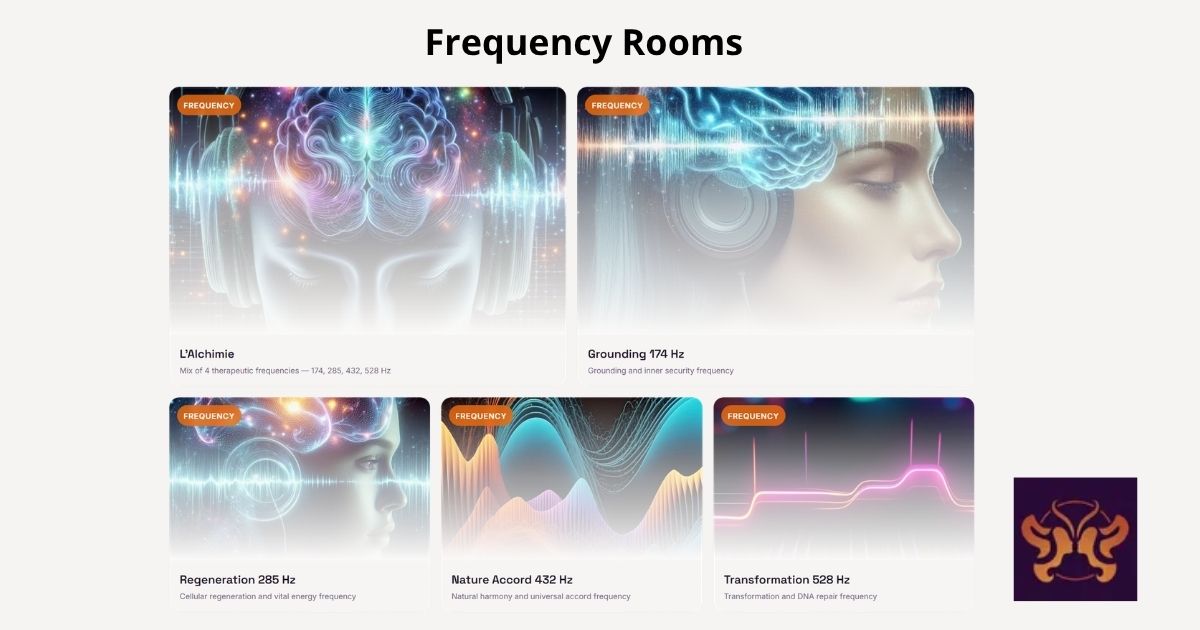
On StarkStream, sound therapy is available on 5 radio stations:
– Frequency Rooms (5 frequency stations):
– Alchemy (mix 174 / 285 / 432 / 528 Hz)
– Grounding 174 Hz
– Regeneration 285 Hz
– Nature Accord 432 Hz
– Transformation 528 Hz
Conclusion
Sound therapy is especially powerful when approached as nervous system hygiene: a regular, safe, measurable practice, without absolute promises.
—
Disclaimer: this article is not a substitute for medical advice. In case of persistent pain, severe anxiety disorder, tinnitus, or epilepsy, seek advice from a healthcare professional.