
Waiting Room Music: The Detail That Prepares the Perceived Quality of Care
Par Christophe · 13 August 2026
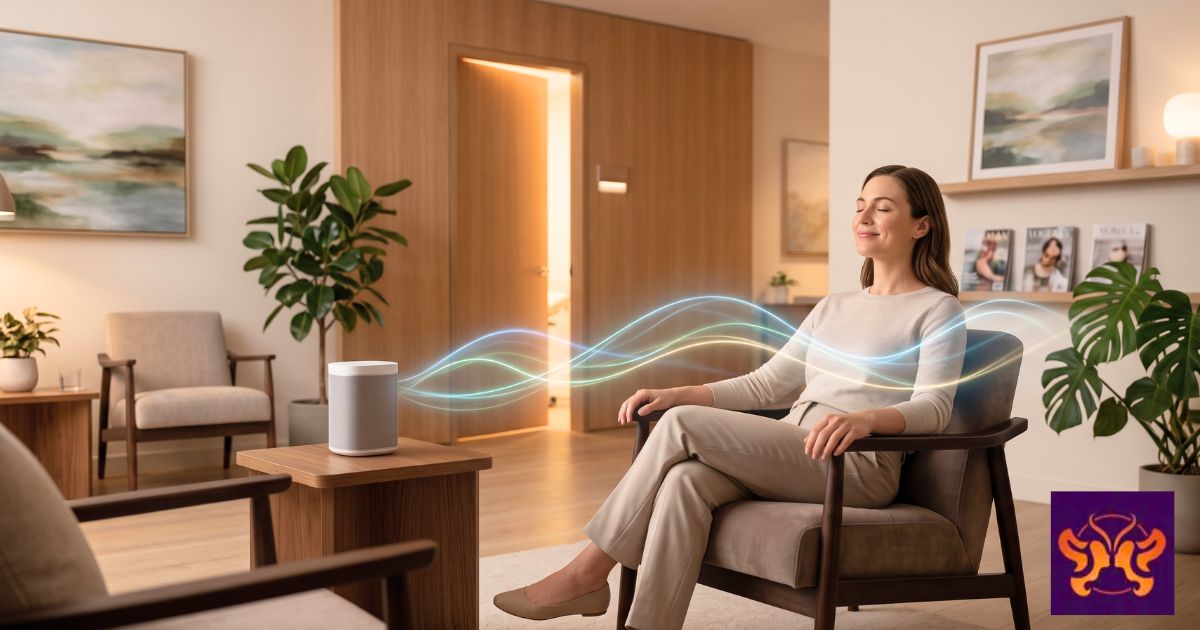
Waiting music is often considered a detail.
We take care of the main room, the treatment cabin, the service, the bedroom, the visible customer journey. Meanwhile, the wait remains an intermediate space, sometimes handled quickly, sometimes left to chance.
Yet, it is often during the wait that the perception of quality is built.
The client is not yet in the main experience, but they are already in the venue. They observe, feel, listen, anticipate. And if this space is poorly designed sonically, the beginning of the experience can lose its coherence.
Waiting is not empty time
In a spa, a hotel, or a treatment practice, waiting does not simply mean biding one’s time.
It is a transition moment.
The client leaves their external pace behind, begins to slow down, and prepares to receive special attention. If the soundscape accompanies this transition, waiting becomes part of the experience. If it does not, it can become a disruption.
An overly pronounced silence makes small noises more noticeable.
Music that is too loud makes relaxation more difficult.
A playlist with too much variation prevents a gradual settling in.
Therefore, the wait must be thought of as a space in its own right.
What the client hears while waiting
During the wait, the client is often more sensitive to the environment.
They are not yet absorbed by the treatment or an activity. Their attention wanders.
They can hear:
- the team’s conversations;
- footsteps in the hallway;
- a door opening;
- technical noises;
- music starting or stopping;
- an abrupt change of track;
- poorly adjusted volume.
A well-constructed soundscape does not eliminate all these elements, but it integrates them better into a general atmosphere.
It gives the venue continuity.
Perceived quality begins in intermediate areas
An establishment may offer an excellent treatment, a beautiful room, or a premium service. But if the intermediate moments seem neglected, the overall experience loses its power.
Waiting areas, changing rooms, hallways, rest or transition spaces are often where coherence is determined.
These are less spectacular spaces, but highly revealing.
Appropriate waiting music shows that the venue has been thought out in detail. It gives an impression of control, calm, and care.
Conversely, an atmosphere left to chance can give the impression that the experience is only under control in the main spaces.
Good waiting music does not try to entertain
In a professional venue, the purpose of waiting music is not to occupy the client at all costs.
Rather, it should prepare.
Prepare the client to slow down.
Prepare the body to transition states.
Prepare the attention to settle.
Prepare for the rest of the experience.
This is why it must be stable, discreet, and consistent.
A good waiting atmosphere is not monotonous. It is clear. It avoids unnecessary surprises. It supports the moment without trying to fill it.
Conclusion
Waiting music is not a secondary background sound.
It is a tool of preparation.
It influences the perceived quality even before the main service begins. It can make the experience smoother, more premium, and more coherent.
In a wellness or hospitality venue, waiting should not be something to be endured.
It must already be part of the care provided to the client.