
Three common mistakes when choosing a playlist for a professional venue
Par Christophe · 20 August 2026
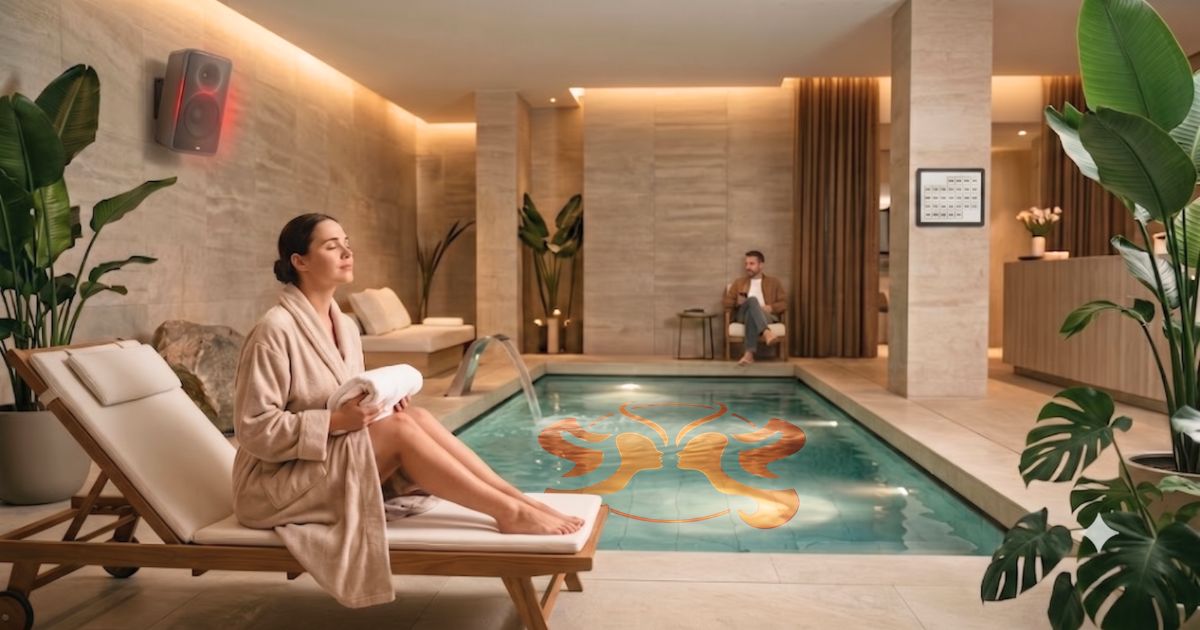
Choosing a playlist for a professional venue seems simple.
You open a platform, search for an atmosphere, and start a selection. If the music sounds pleasant, the problem seems solved.
But in a spa, a hotel, a restaurant, or a wellness space, a playlist shouldn’t be judged like music you listen to at home. It must work in a real space, with clients, staff, schedules, different areas, and an experience to maintain over time.
This is where certain mistakes often occur.
Mistake 1: Choosing based on personal taste
It is the most natural one.
Someone on the team likes a playlist. It seems calm, elegant, or pleasant. So, it is used in the venue.
The problem is that personal taste is not an atmospheric strategy.
Music can be beautiful to listen to alone but perform poorly in a professional context. It can draw too much attention, shift energy too often, feature vocals that are too prominent, or create an emotion that doesn’t fit the moment.
The right question is not: “Do I like this music?”
The right question is: “Does it serve the experience the venue wants to create?”
Mistake 2: Forgetting quiet periods
A playlist is often chosen when the venue is lively: busy reception, clients present, staff in motion.
But it must also work during quiet periods.
Early in the morning.
Between two appointments.
At the end of the day.
In a nearly empty hallway.
In a silent waiting room.
In a treatment room where every detail becomes more noticeable.
In these moments, poorly adapted music becomes much more noticeable.
A song with too much character can feel intrusive. Silence between two tracks can feel awkward. A sudden variation can break the calm.
A professional atmosphere must hold up even when almost nothing is happening.
Mistake 3: Confusing calm with monotony
In wellness spaces, we often look for calm music.
But calm does not mean flat.
An overly repetitive atmosphere can tire the staff, make the venue feel less alive, or give an artificial impression. Conversely, a too-unpredictable atmosphere can prevent relaxation.
The right balance consists of creating a dynamic stability.
Music that breathes, but doesn’t surprise.
A gentle progression, but not a mechanical succession.
A sufficient presence, but never overwhelming.
It is often this nuance that distinguishes a simple playlist from a true soundscape.
A playlist is not a system
Even a good playlist can cause issues if it is not integrated into a logic of use.
What volume for which zone?
What atmosphere for what time of day?
What continuity between reception and the treatment room?
Who changes the music?
What happens if the playlist stops?
Does the team need to intervene?
A professional venue needs a simple, stable, and consistent system.
Not a choice that has to be remade every day.
Conclusion
The music of a professional venue should not just be pleasant.
It must be adapted, reliable, and consistent.
Avoiding these three mistakes already changes a lot: moving away from personal taste, considering quiet periods, and seeking true stability rather than a flat calm.
A good soundscape does more than just fill the space.
It helps the venue deliver on its promise.